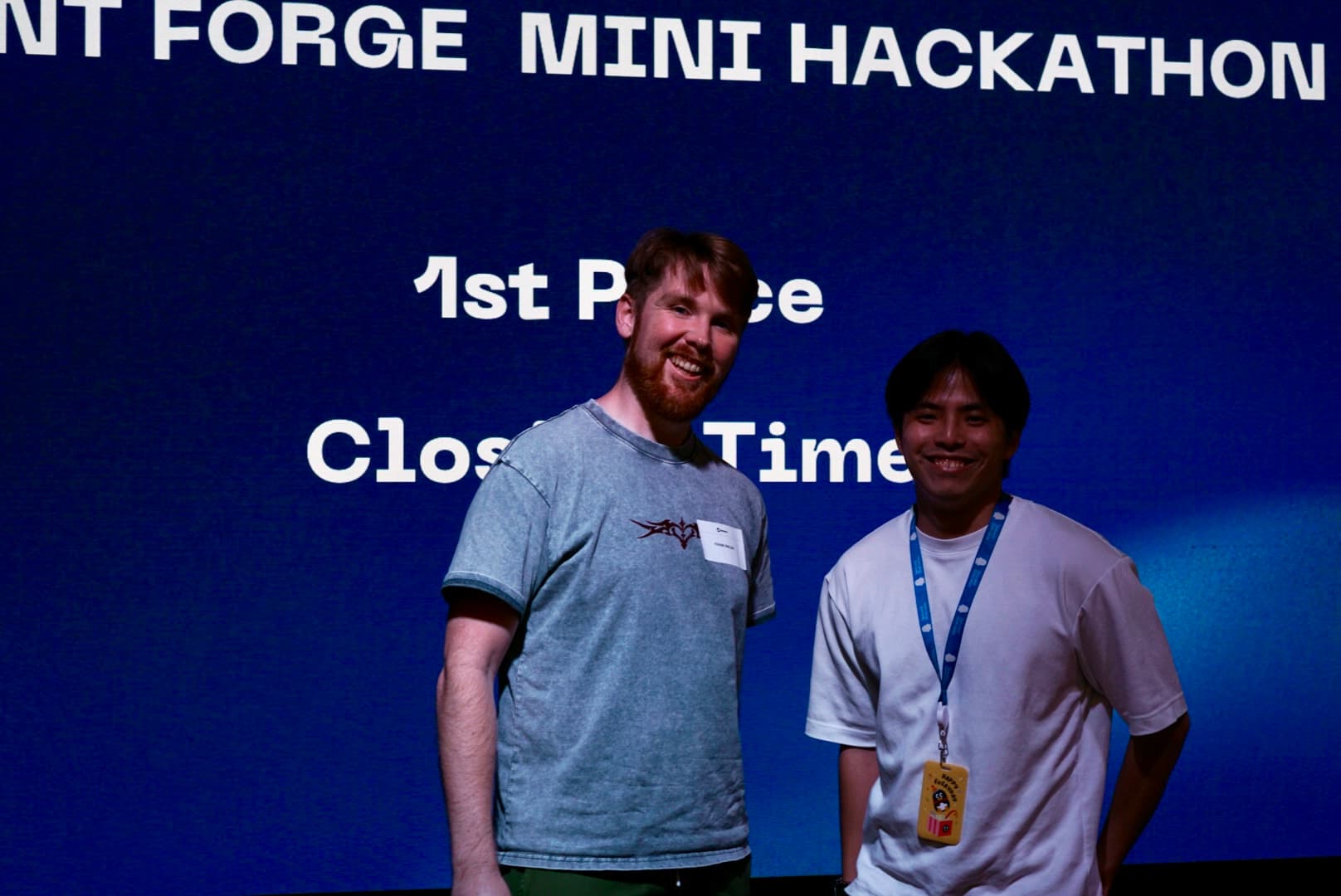
This past Friday, July 3rd: my first hackathon back in a long while. Somehow it ended with a first-place finish.
- event
- Agent Forge Mini Hackathon: One-click Agent Deploy
- hosts
- AI Builders · Tencent EdgeOne · Digital Jungle SF
- where
- Digital Jungle, 972 Mission St, San Francisco
- when
- July 3, 2026 · one (1) hour of hacking
- result
- 1st place — “Closing Time”
- links
- live site ↗event page ↗pitch video ↗repo ↗
## Blame Ali
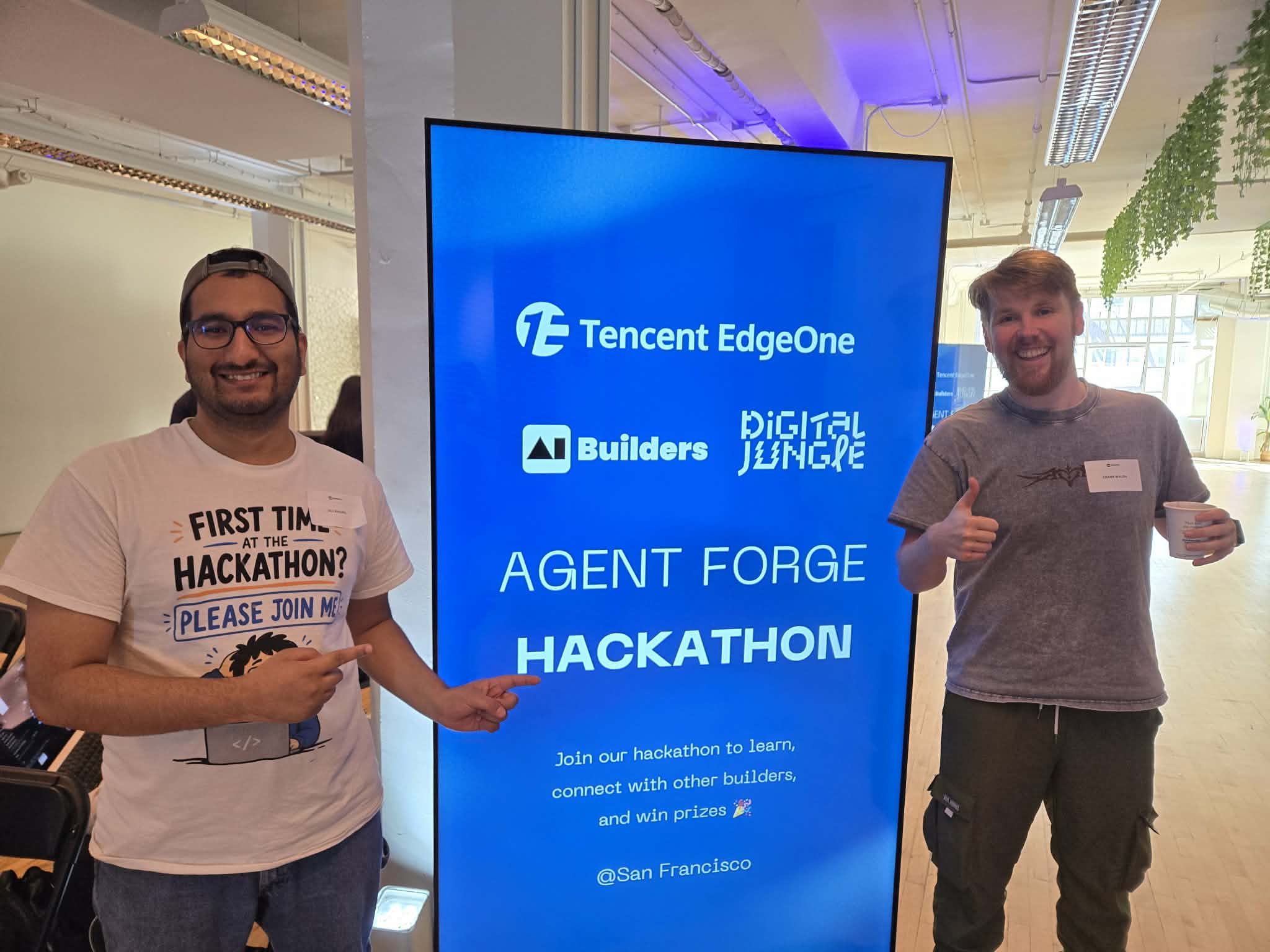
Credit where it's due: I only started going to hackathons again because of my friend Ali Amjad. He dropped everything to move to the Bay Area for three months to chase his dream of being a founder, and he's been documenting the whole thing in daily posts. Spoiler: I finally made it into one on day 67. He's an absolute gem, and if you're not already following him, I'd really recommend it. He's going to do great things.
## The format: one hour. That's it.
The hackathon itself was a little strange: one hour of hacking. Not one day. One hour.
It fit the theme, though. The event was built around Tencent's new EdgeOne Makers platform, basically a one-stop shop for frontend, backend, and (most importantly) putting agents in the cloud. The whole point was to show how fast you could get a working demo running on it. One hour to build something real is a pretty bold way to advertise your platform, and honestly, it worked.
And the platform held up. Great HTML docs that Claude could peruse, solid CLI and MCP tooling. I was genuinely impressed with what people shipped in sixty minutes: an agent that scans your email inbox for git comments and generates PRs (or something like that, I'm not a SWE), a radiologist's agent (I'll be honest, I kind of blacked out for that one since it was the demo right after mine), and an in-browser agent that helps with accessibility.
## The real hack happened before the hackathon
With only an hour on the clock, I knew the actual work had to happen ahead of time. So a couple of evenings that week, after my kiddo went to bed, I prepped:
- ▸Toyed around with the platform and got my accounts and console set up (the hackathon really did its job of advertising the platform, LOL)
- ▸Settled on an idea I knew would appeal to the judges and sponsors
- ▸Planned how I'd divide the work and prompts among my agents
- ▸Built a local knowledge base of the platform docs, so during the hour Claude could grep over files I already had instead of fetching docs live
Claude was really, really good for this. I ran /deep-research on the judges, sponsors, and founders, then turned the results into an HTML page I could review, links and all.
The one-hour constraint just moves the competition to the week before.
## The AI gatekeeper
Another quirk: only the top five teams got to pitch, and the five were screened and ranked by an AI agent. That was a bit daunting. How could I make sure the agent saw everything I wanted it to see?
My answer was to write for the reader I actually had. I asked Claude to put things in the GitHub repo that I knew would appeal to the judges, like a README table mapping every feature directly to the EdgeOne primitives it used. If an agent is doing the first pass, make your repo greppable.
## The hour itself
Some things I learned in the sixty minutes:
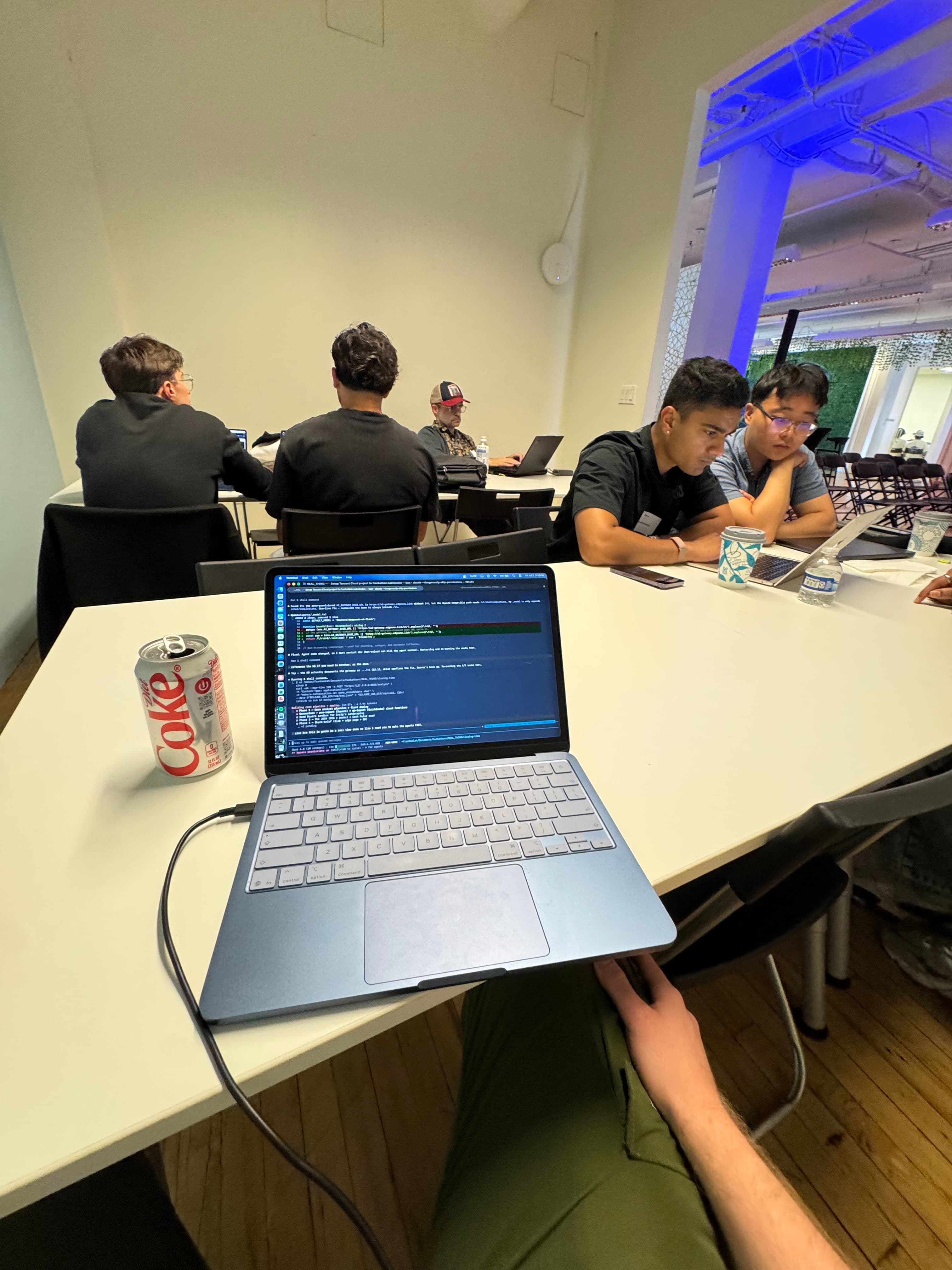
- ▸Claude's /fast mode was a godsend, and I ran Opus agents on medium reasoning to keep the speed up. I had three Ghostty tmux sessions going with multi-agent orchestration teams dividing the work, and I still barely had time.
- ▸I had to make a diving catch on the submission video: 10MB upload limit, so I installed FFmpeg and compressed it with about three minutes to spare.
- ▸I went solo on purpose. In one hour you'd barely have time to divide up the work, let alone conquer it.
- ▸My laptop almost didn't make it. My Claude status line showed SWAP/MEM:Warning for the entire hackathon. Might be time to upgrade the personal machine, LOL.
## The pitch
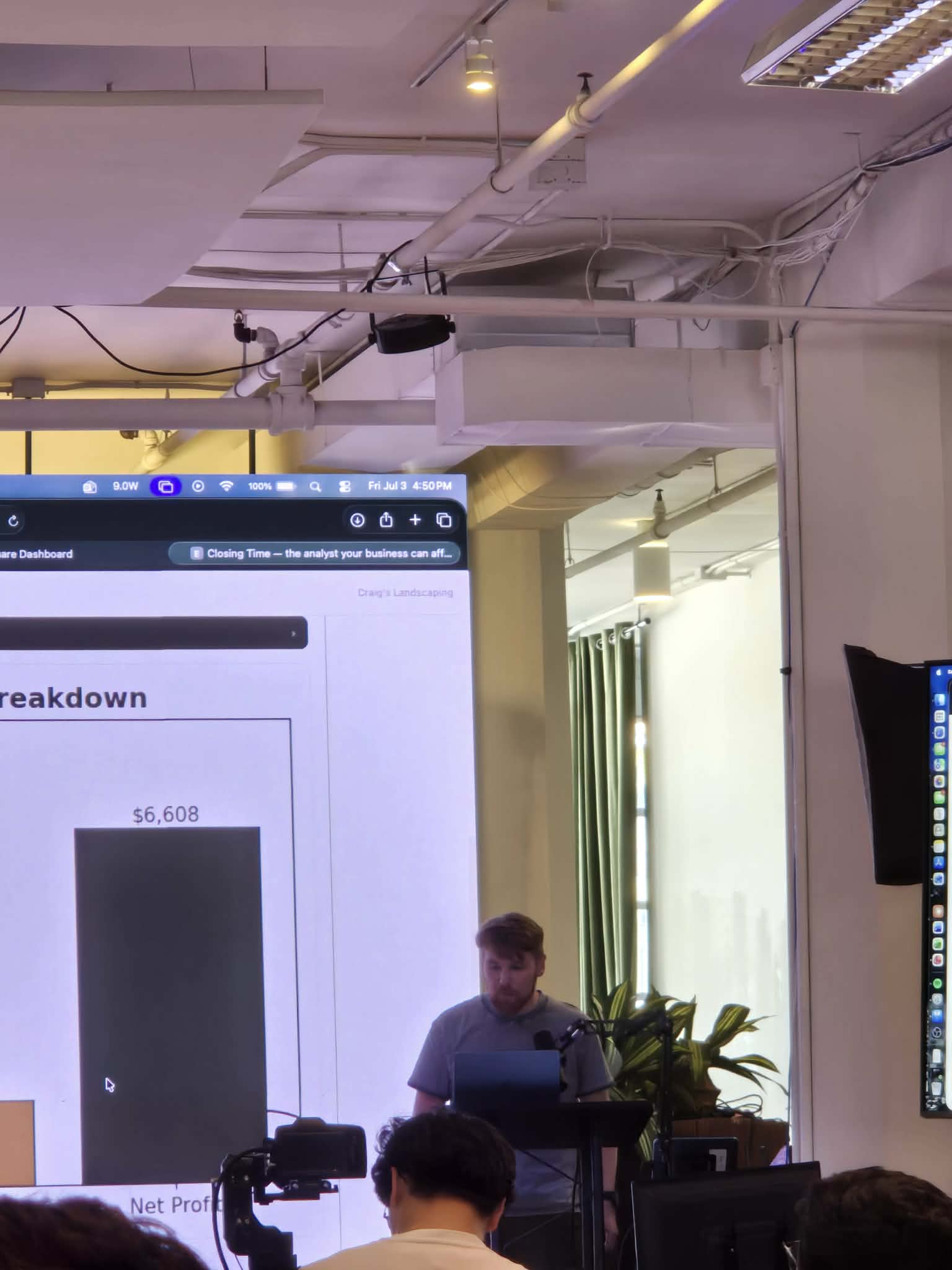
My pitch only took half the time allotted, and honestly, I think that was fine. Short, succinct, and punchy lands harder than a pitch drawn out for no reason other than filling time. The whole thing is on YouTube if you want to see what a half-length pitch looks like:
## What going back reminded me
The basics still apply:
- ▸Dive hard into the sponsor stuff. The event exists because of them, and they're the ones judging.
- ▸It's all about the demo. Get to a working demo first, polish later.
- ▸The founder-pitch framing works: solve an acute problem, ideally for a niche.
I built Closing Time, an AI data analyst for small businesses that writes and runs live Python on EdgeOne. It took first. Day one back. See you at the next one.