Twenty minutes before I left for my Y Combinator interview, I said out loud, to an AI: “I don't have that proof point.” Nine hours later, YC said the same thing back to me, more politely, in writing.
That's the short version. The long version starts three weeks earlier, with an application I filled out on a whim, and ends with me at home at 9:01 PM refreshing my inbox and feeling like a total failure. I want to write the whole arc down while it still stings, because the stinging part is the record: what the process actually is, what the room is actually like, and exactly where I lost it.
- company
- sev10: AI agents for safety-critical hardware documentation (FMEDA / DFMEA, ISO 26262)
- batch
- Fall 2026 · applied solo, pre-product, pre-revenue
- where
- 560 20th St, San Francisco · in person, a “small-scale experiment” for local applicants
- when
- August 7, 2026 · 2:15 PM PDT · notice given August 6, 2:15 PM. Twenty-four hours, to the minute.
- partners
- Francois Chaubard (founder, Focal Systems) · Andrew Miklas (co-founder & CTO, PagerDuty)
- result
- rejected at 9:01 PM the same day · “strongly encourage you to re-apply”
- links
- founder video ↗yc on interviews ↗
## The application
I applied about a week before the deadline, on a whim. The honest goal was to fill out the application and get to know the process, not to get in. I'd just watched my hackathon summer wind down and figured the application itself would teach me something.
It did, immediately: the application has very little to do with your idea. After the founder profiles, the equity questions, the revenue questions, and the how-will-you-make-money questions, the idea itself is maybe ten percent of the form. I think that's the application quietly telling you what being a founder actually is. The product is supposed to be the easy part. Sales, people, legal, equity: that's the job. A good founder gets that machinery sorted first so they can spend their attention on product. I am not yet that founder, and the form knew it before I did.
For context, here's the application itself. If you're thinking about applying, this is what a got-an-interview-as-a-solo-founder application looks like:
▸ cat application.md · the full application, click to expand (founder profile omitted)
All of it, me. Hardware and software. No contractors, no agency, no non-founder help.
Yes. Not another builder - I ship the whole stack myself, hardware through web app. I want my opposite: someone who loves sales and people the way I love building.
Sev10 is direct sales, $150-250k contracts into safety teams. I'm doing that work myself right now, but, I know where my ceiling is. My last product made ~$1,000, hit bad unit economics, and instead of finding customers who'd pay more, I made it free. A sales cofounder would have gotten on the phone. That's the mistake I'm not repeating.
AI analysis for ISO 26262, DO-254, IEC 60601
Every car, jet, and pacemaker has to prove it won't kill you before it ships. Creating that proof takes senior engineers weeks in Excel, and it dies the moment the design changes.
Sev10 is an agent harness for systems engineers. Point it at your PLM, your specs, the internal communications where the decision actually got made. Ask for the analysis. Every claim cited, ready to sign.
DFMEA, FMEDA and HARA first. Safety is the way in - the only job that's both legally mandatory and requires reading your entire system. Once the harness is in, the rest of engineering is downstream: design acceleration, every other compliance artifact.
My customers are here. The companies carrying an ISO 26262 or DO-254 requirement without a big safety org are concentrated in the Bay: the EV, autonomy, drone, and new defense hardware companies. This product gets sold by sitting next to safety engineers and watching them work. My network is here. The agent talent is here. I already live here.
Pre-product. First usable version ships within a month. What I bring today: six years living this exact workflow.
Jac programming language for agent orchestration - every panel run checkpointed and replayable, which is the audit trail an assessor reads. Claude via API. Component failure-rate libraries (SN 29500, IEC 62380, FIDES) for the FMEDA math - the part that has to be defensible to a TUV or DER assessor, not just plausible. OCR for datasheet extraction. Postgres + pgvector for the citation corpus. FastAPI backend, Next.js front end, Excel export, because Excel is how the incumbents interchange.
Defense inference runs in AWS GovCloud via Bedrock: FedRAMP High, DoD IL5, the sanctioned path for ITAR data.
No benchmark measures which model has the best systems-engineering worldview, so I'll build one. I've built an agent benchmark before.
No
No
I've been the engineer in that room: seven years of safety-critical electronics.
Two things you can't see from outside. Design is not the bottleneck - proving the design is safe is, and nobody enjoys it, so it gets done to the minimum that passes. And the quantitative half is worse than the qualitative half: an FMEDA means apportioning failure rates and diagnostic coverage across every component until the metrics close against an ASIL target, by hand, in Excel, and again after every design change. That's the work I'm automating.
Hardware engineering is also embarrassingly late to AI. The work is structured text and reasoning, models eat it for breakfast, and most EEs have never touched an agent harness. Software got its Cursor moment two years ago. Hardware's is sitting there unclaimed.
Nobody needs convincing the work is worth paying for. It's the law.
Ansys medini analyze is the incumbent, with APIS IQ-FMEA and PLATO SCIO below it. They're structured editors - somewhere to type the analysis and check it for completeness. They don't do the analysis, and they interchange by Excel.
On the AI side: Saphira (YC S24) generates FMEA and HARA, now aimed at autonomous machines. Ketryx raised $39M for agentic ISO 26262 traceability. LLM-generated FMEA is already a real academic literature.
What none of them do is the quantitative side. FMEDA - diagnostic coverage, SPFM, LFM, PMHF computed against a hardware failure-rate budget - is the artifact that actually gates an ASIL-D or DO-254 DAL-A sign-off, and it's absent from all of them. So is DO-254 avionics and IEC 60601 medical, entirely.
Everyone else is automating the document. I'm automating the analysis.
Compliance eats 25-40% of certified hardware development cost. $1.4B a year goes to the tools, growing 10%. Another $3.4B a year goes to consultants doing the analysis by hand. Sev10 sells the analysis, so the consultant line is the real market - these teams spend an order of magnitude more on labor than on software.
$150-250k per team per year, deployed in the customer's own cloud, GovCloud for defense, so design data never leaves their environment. Forty beachhead customers is $6-10M ARR: US EV, defense, drone, and robotics companies with the requirement and no big safety org.
That's the wedge, not the market. Every certified hardware program on earth runs this workflow - ISO 26262, DO-254, IEC 60601, IEC 61508. Same model, different acronym.
Machine-readable datasheets. Every hardware engineer on earth parses PDFs by hand to get part parameters. A clean structured API over the world's component datasheets is infrastructure everything in agentic hardware design will need, including my main idea.
No
100% Frank Walsh, CEO. When I find the right GTM cofounder, I expect to give up meaningful equity - a true partner, not an early hire.
It's been the plan since college. The last seven years were deliberate training for it. Why now: I got tired of waiting for someone else to build this. The models got good two years ago, hardware still has no agent tooling, and every month I watch safety teams burn weeks in Excel on work a harness could do in hours. Nobody encouraged me to apply. No events yet.
It's very well known in my home province of Newfoundland, Canada. Co-lab is one of the biggest success stories. People from home interview for batches and it makes the news. I don't live there anymore, but I still follow it.
The other thing that ate my time was the founder video. One minute, hard limit. Getting a company into sixty seconds is a compression exercise: every cut is a decision about what the company actually is. The take I kept came in at 59.7 seconds:
## The nudge
Three days after the deadline I got a message from Kulveer, a YC partner. I'd braced for silence, so any message at all was a shock, and when I skimmed it I initially read it as the soft no: you don't have a co-founder, sorry.It wasn't. It was a push.
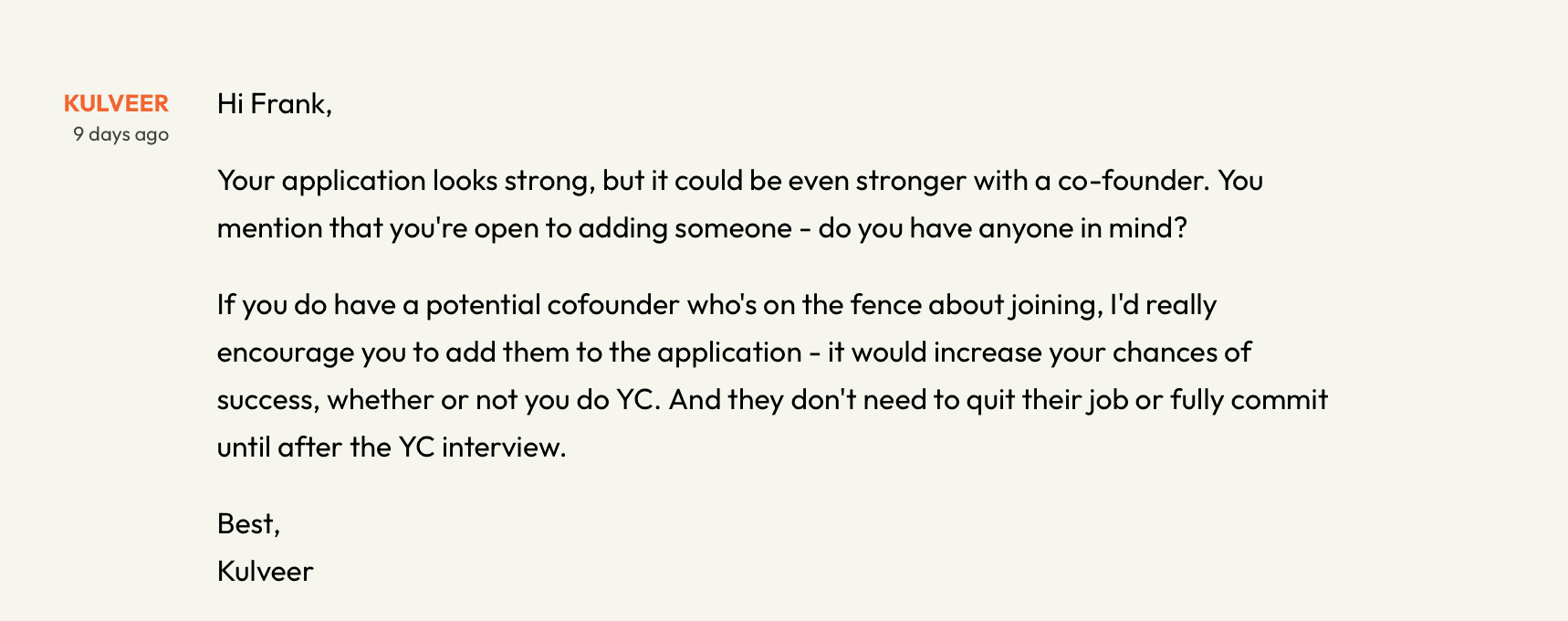
This is YC, so I did everything I could. I worked my network from the top down, starting with the people I'd most want to build a company with and burning downward. I did what a good (bad) Newfoundlander does and tried to braindrain the NL tech scene on the way.
The scramble taught me two things. First: I had pinned my weakness in the application as sales, because my last product died from a lack of it, so I assumed I needed a sales co-founder. My friend Tom quoted Founders at Work-adjacent scripture at me: founder sales. A sales hire is useless before there's a sales motion for them to run. What I actually needed was someone as generally excited about this as me. Second, and I don't think I'm done learning this one: co-founder trust is the scarce resource. Most startups die of co-founder fights, and the fix isn't a LinkedIn search, it's years. The people I'd bank on have stable jobs and lives. Either I eventually convince one of them, or I keep showing up at hackathons and founder events until the network produces someone, and both of those are slow.
One more thing about the nudge, because it matters later: since I'd misread it as a pass, I did no interview prep. None. The application was the prep.
## Twenty-four hours
The interview invite arrived Thursday at 2:15 PM. The interview was Friday at 2:15 PM. Twenty-four hours of notice, exactly, to the minute, and I didn't see the email until two hours in, driving home from work.
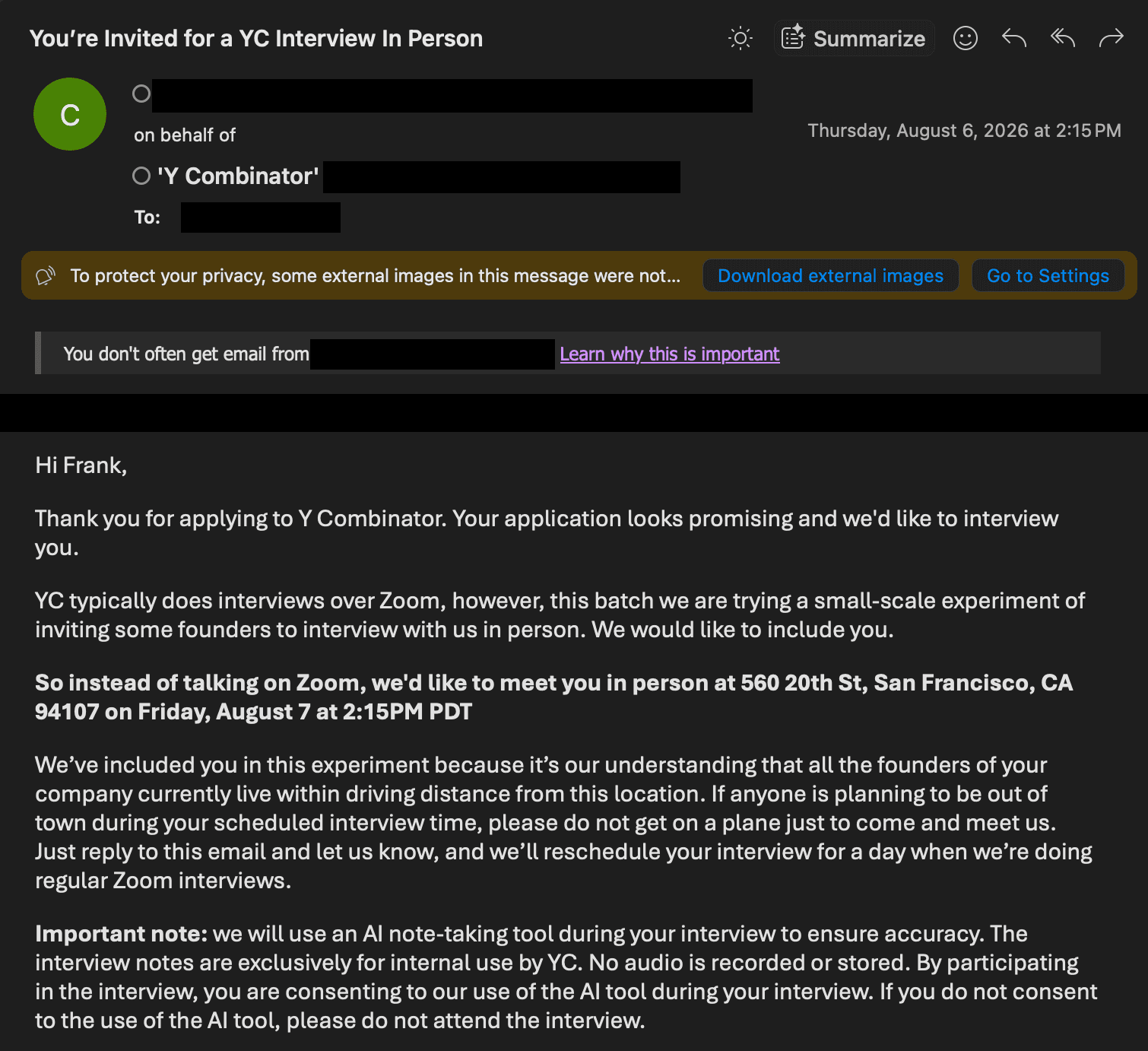
Two details in that email I love. This batch was the first time in years YC did interviews in person at all: a small experiment, only for applicants who'd said they were local. And the interview for my AI company would have an AI note-taker in the room, with a consent clause: if you don't agree, don't attend.
The moment I got home: Claude, voice mode, drill me. What does sev10 do. Why are you the right person. Why now. What's the moat. On repeat, in the car, in the kitchen, that night, the next morning. I learned something uncomfortable about myself in those drills: when the question came veiled (the why-you question dressed up as a contrarian-belief question), I had real trouble detecting the root of what was being asked. I'd answer the costume instead of the question. I'm a little neurodivergent and I think this is the shape it takes under pressure. A co-founder would cover exactly this. Failing that, it's trainable, and I now have the transcripts to train on.
And then there was one exchange, twenty minutes before I left, that in hindsight was the whole interview happening early:
I said it out loud and left anyway. There was nothing else to do; you can't build the proof point in twenty minutes. But I want the record to show that I knew. Somewhere under the adrenaline, I drove to the interview already knowing exactly which question was going to end me.
The drilling wasn't wasted, for what it's worth. By the time I parked I could answer the straight versions cold. It just turns out the straight versions weren't the test.
## Inside 560 20th St
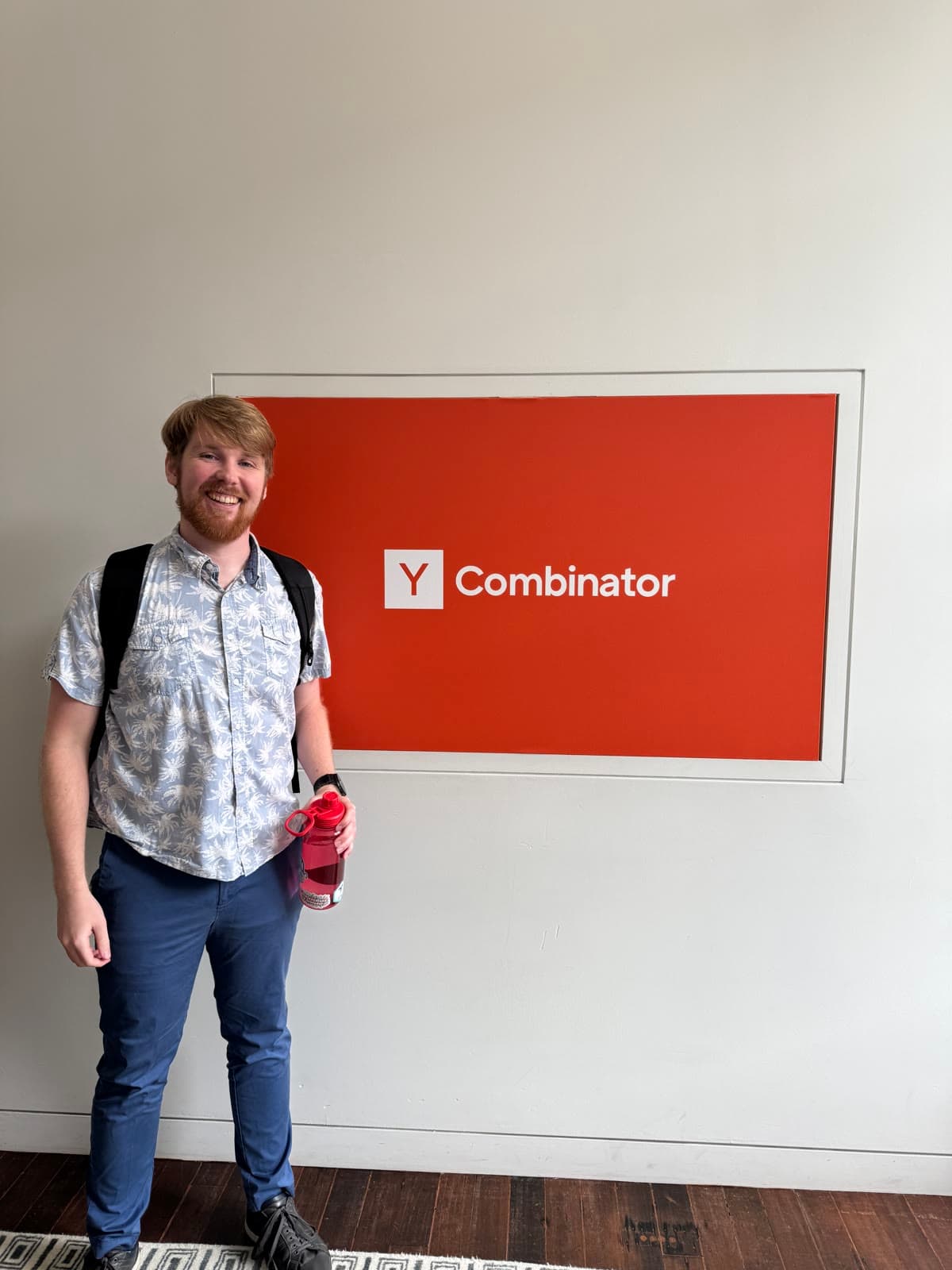
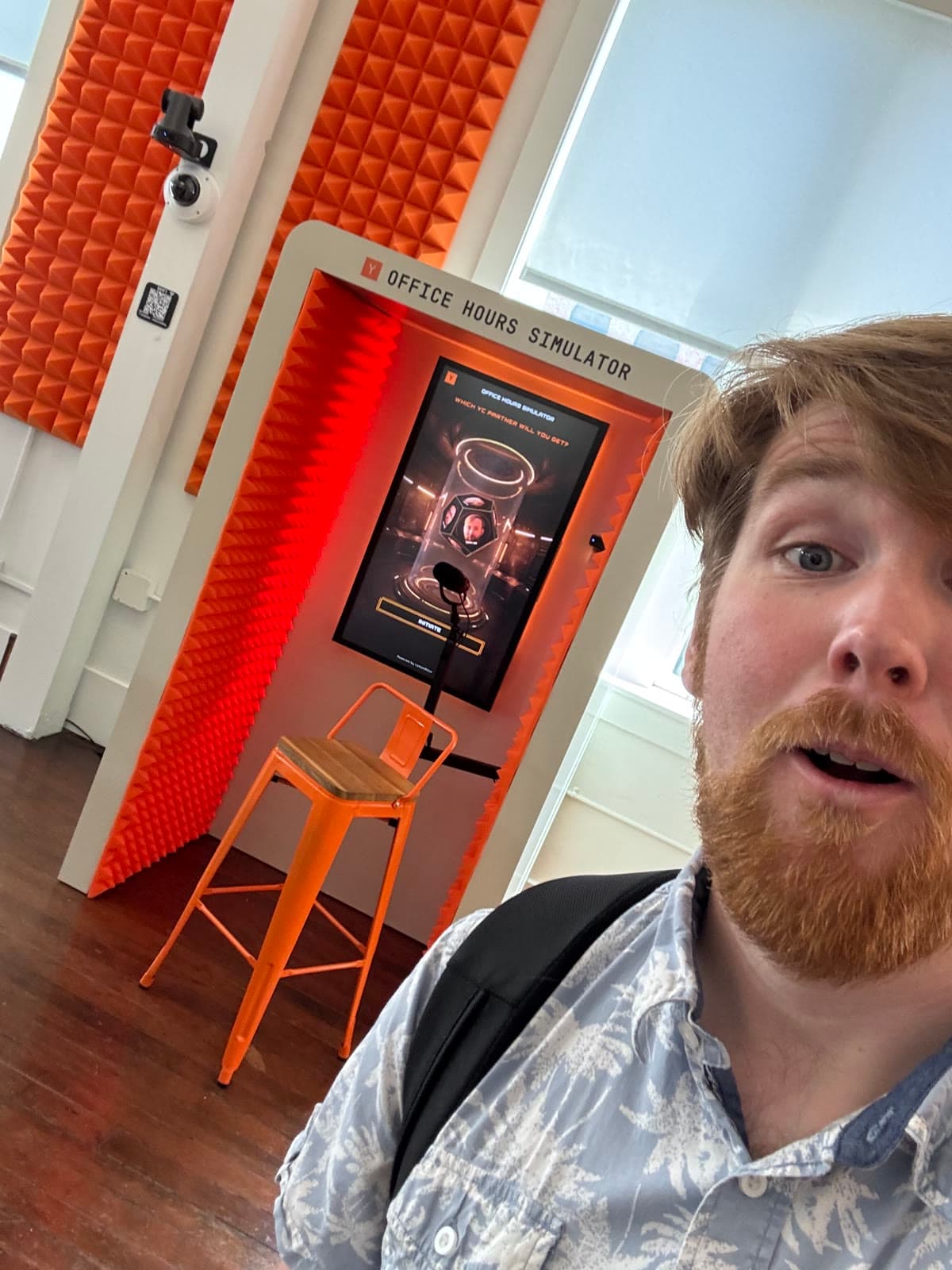
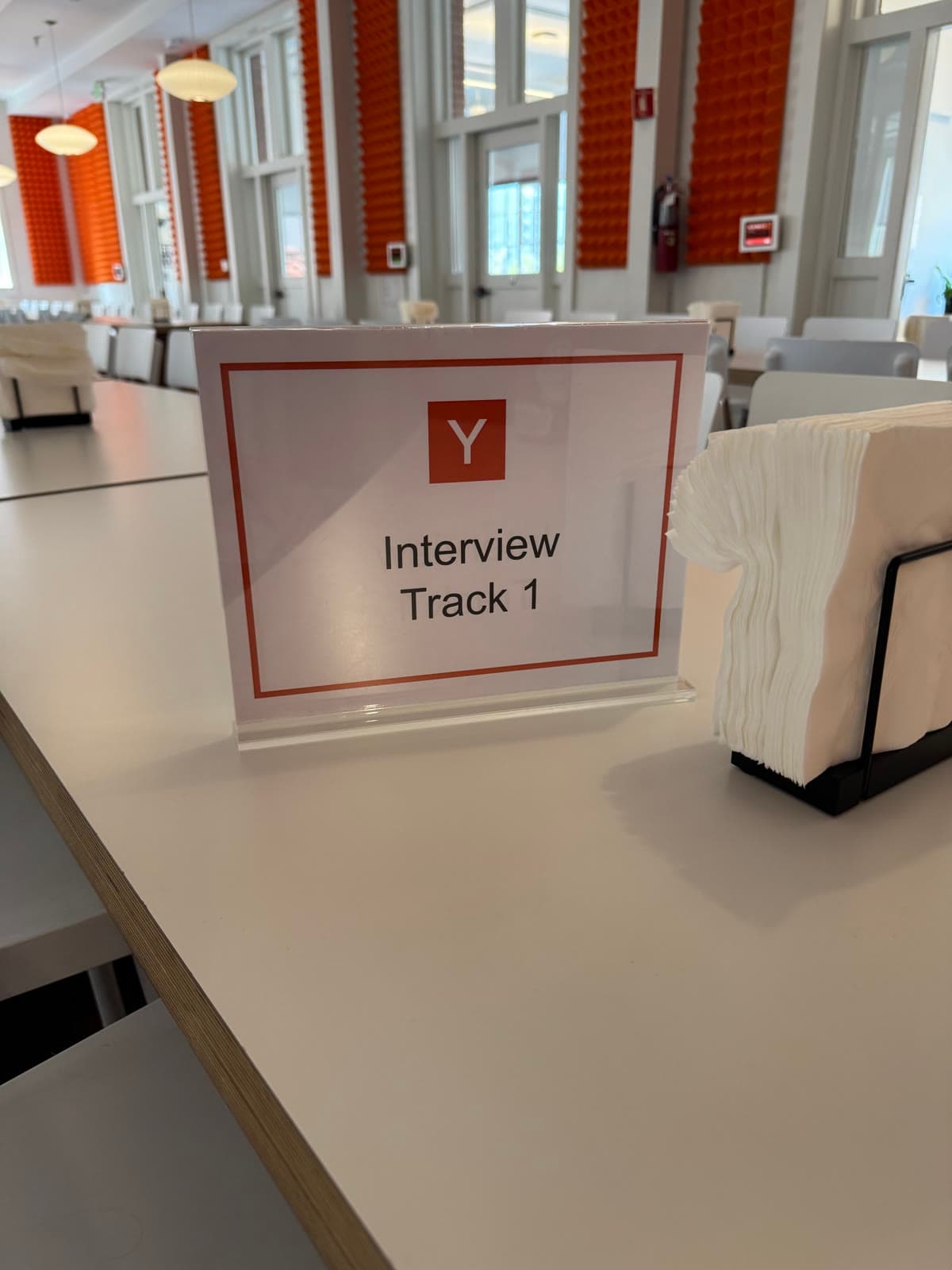
Getting inside YC is a treat I'm not going to pretend I'm too cool for. This is the building where a meaningful fraction of the software I use daily got its start, and walking in as an interviewee, even a doomed one, felt like being handed a day pass to a place I'd only read about. Partners wandered the cafeteria eating lunch like it was nobody's business. I sat at a table with a little acrylic sign that said Interview Track 1 and tried to act like I belonged there.
## Ten minutes
I'd assumed I'd be interviewed by Kulveer, since he was the partner who'd messaged me. Instead: two guys I didn't recognize, who I'd learn afterward were Francois Chaubard (founder of Focal Systems, nine years grinding computer vision into enterprise retail) and Andrew Miklas, co-founder and founding CTO of PagerDuty. Both hardware-adjacent, both deeply technical. At the time they were just two strangers who sat down and started swinging.
First question, after “what does sev10 do”: “We don't understand. Explain to us what this safety documentation is.” My first reaction, privately, was that this was a bit naive. Who doesn't know that safety-critical hardware ships with a mountain of safety documentation? My second reaction, later, was that naive questions from smart people aren't naive. In the age of AI, when anyone can sound fluent about anything, the founders worth funding are the ones who actually know their domain cold, and the fastest way to test that is to make them teach it. So I taught it. I walked through how an FMEDA works, painfully, from failure modes to diagnostic coverage, and I think I cleared the bar, because they moved on instead of digging.
If I could redo one logistical thing: I'd have walked in with printed handouts. File folders. A real FMEDA, a real DFMEA, a one-page market brochure: artifacts on the table instead of me waving my hands at the air. When they asked about market size I gave a bottoms-up analysis out loud that would have landed twice as hard as a page they could hold.
Some of it landed anyway. They asked what revenue I'd expect by demo day and I said a million ARR from ten customers, and walked the math. They visibly liked that. Then they grilled the enterprise sales plan and visibly did not. One of them pushed the thesis that the giants, the Apples and Teslas of the world, think they're god and build everything in-house, and I scrambled to the right answer a beat too late: the wedge is the mid-market, hardware companies with fifty to five hundred engineers carrying the same ISO 26262 burden as Tesla with none of Tesla's functional-safety army. I also told them pivoting to defense or medical later would be easy, which I could feel them file under “unfocused.”
I made one unforced error: I mentioned that inside big companies, electronics engineers mostly don't embrace AI tools. They pounced: “that contradicts your whole company.” What I should have said, and didn't manage until the drive home, is that it's the entire reason sev10 should exist: those engineers don't have time to learn Claude Code and prompt engineering. They need the tool that already speaks FMEDA when they open it.
And then the question I'd been dreading since the parking lot: walk us through exactly how a customer would use this. What does the pipeline look like. What's the harness. And I didn't have it. I said something vague about automating versus augmenting that confused them further, and offered “Cursor, but for safety documents,” which is a genre, not a product. They were asking what happens in the first five minutes after a safety engineer logs in, and I could not tell them, because I haven't built it, and I hadn't done the work of knowing it before building it. They called my bluff. It was the right call.
## 9:01 PM
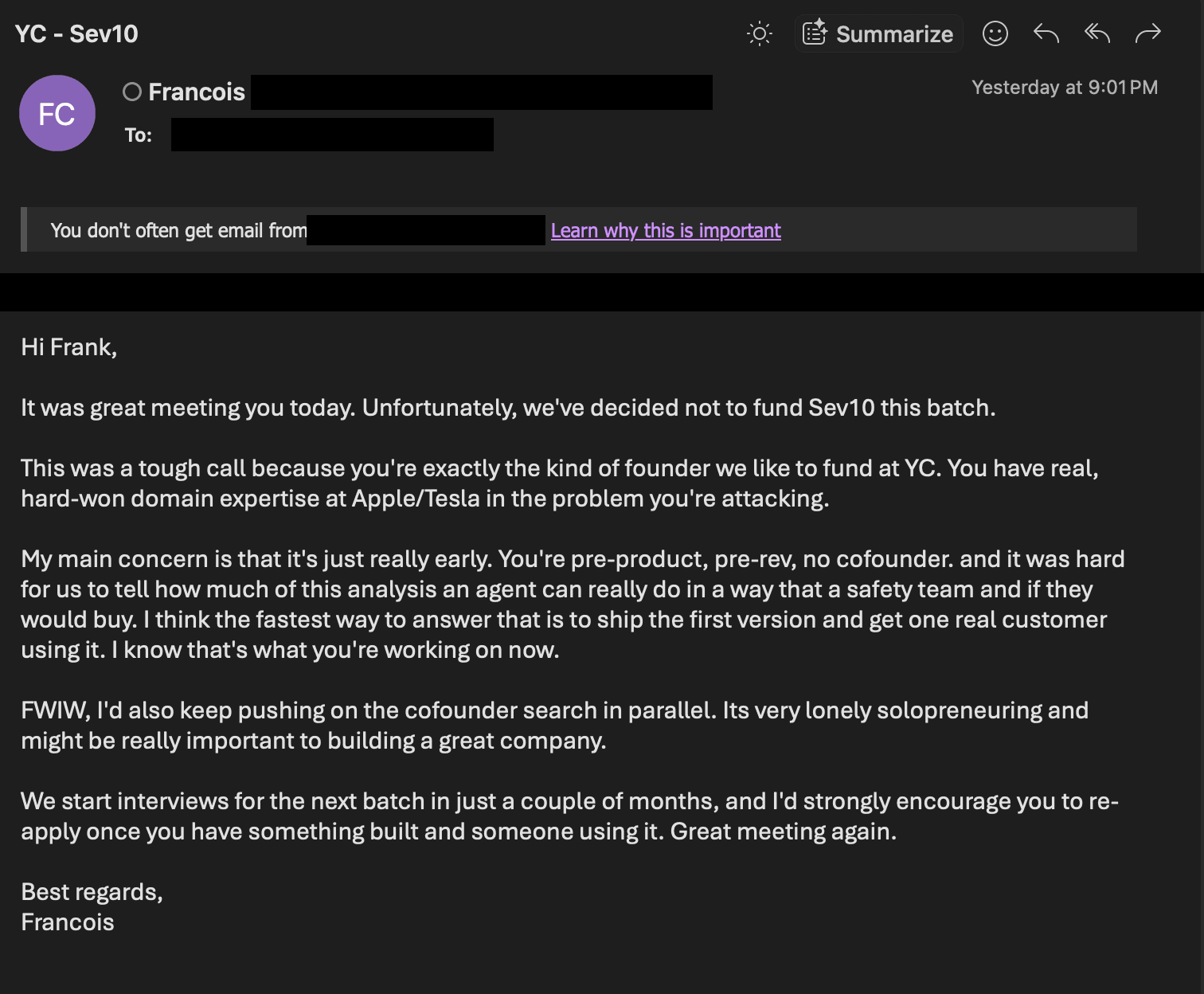
YC decides the same day. The email came at 9:01 PM, while I was doing the thing where you refresh your inbox and pretend you're not.
Did I feel embarrassed and dejected that night? Yes. Fully. I sat with the specific shame of having been handed a shot most founders never get (a solo, pre-product, pre-revenue application pulled into a partner interview) and having shown up without the one thing that mattered.
But read the email with less fresh-wound eyes and it's close to the best possible no. Every stated reason is stage, not substance: pre-product, pre-revenue, no co-founder. Nothing about the market being wrong. Nothing about me not knowing my domain. The one real technical doubt (can an agent actually do what a safety team does, in a way a safety team would buy?) is exactly the question I couldn't answer in the room, and the email hands me the answer key: ship the first version, get one real customer using it. There was a lot of noise in my interview because I had no signal to give them. The fix is not a better interview. The fix is signal.
## What I'm taking
I wrote a good application; the interview itself proves that. The application is a writing problem, and I can write. But the interview is a building problem wearing a talking problem's clothes, and no amount of voice-mode drilling covers for the thing not existing. Signal is a user and revenue. Ultimately nothing else matters. Everything I fumbled (the pipeline question, the harness question, the enterprise sales plan) gets answered automatically by the grind of going zero to one, which is the REALLY freaking hard part they know all the details live inside of. That's why their advice fits in a sentence.
So: build the thing. Put it in front of one real safety team. Get one real customer using it, keep working the co-founder search in parallel (it is, verifiably, very lonely solopreneuring) and walk back into that building in a couple of months with the signal served on a platter, because it's too hard for them to dig for it and they shouldn't have to.
I flew close to the sun this week. I got to spend twenty-four hours believing that five hundred grand and a year of runway might land in my account on Monday, and I'm not going to pretend the taste of that hasn't changed me. I want it. YC looked at me, correctly, and handed me the bitter medicine instead: you're exactly the kind of founder we like to fund. Now go become fundable.
See you in a couple of months.